Monday, August 07, 2006

Hezbollah Rockets and SEC 10-Q Filings: "Duck & Cover!"


Is cannon fire now being met by muted optimism?

Shares of many U.S. listed-Israeli companies, after initially slumping following Hezbollah's capture of two Israeli soldiers in a cross-border raid on July 12, have either rebounded or remained relatively flat in the last ten trading sessions. For example, the Common Stock prices of software developer AmDocs (DOX-$35.83), Internet security software maker Check Point Software Technologies (CHKP-$16.72), and generic drug maker Teva Pharmaceutical Industries (TEVA-$34.31) climbed/ (fell) from July 12 – July 21 and then climbed/ (fell) from July 24 – August 4, respectively: $1.95 / $(0.77), $(0.65) / $0.18, and $(1.86) / $4.55.

After falling nearly 10% during the first two days of the fighting, the Tel Aviv 100 index was up 3% this past week Our view is that investors believe that historical Israeli economic resilience during past conflicts will stand the test this time around, too.

Dun & Bradstreet (Israel) optimistically points out that the present escalation started in one of the best periods ever in the history of Israel's economy. The research group emphasized that 2005 constituted the best year ever in the history of the Israeli hi-tech industry, as the revenue of leading technology companies increased by 20 percent over 2000, the sector's previous peak year. Industrial exports, which constitute almost 40% of the total industrial product, also increased by 5.6%, after rising 17% in 2004.

Still, workers huddled in bomb shelters are not good for business. The Israeli Manufacturers Association says that reduced activity in factories in Haifa (Israel’s third largest city) and the rest of the North has already caused $500 million in financial damage. According to the latest information collected by the Association's emergency headquarters in the North about 35 percent of the 1,800 factories and small manufacturing businesses in Haifa and the North were shut, about 35% were in partial operation and some 30% were working as usual.

In 2004, Israel was America's 19th leading trade partner, with total trade (imports and exports) totaling more than $26.6 billion.

In 2005, companies based in the States of California, Massachusetts, and New York, respectively, exported over $1.4 billion, $135.3 million, and $4.4 billion worth of manufacturing goods to Israel.

Some of the nation's largest companies, such as IBM, Microsoft, Cisco, and McDonald's are home to Israel (with diverse levels of capital exposure).

The world's largest maker of semiconductor production equipment Applied Materials (AMAT-$15.50) operates a Process Diagnotics and Control business groups in Rehovot that develops and produces control systems for semiconductor equipment and software for real-time monitoring of cluster tools, including laser cleaning technology, advanced defect detection, review and metrology systems.

Networking hardware and software maker 3Com Corporation (COMS-$4.71) operates a manufacturing facility in Tel Aviv.

The maker of everything from Scotch tape to optical glare-reducing films for LCD TV screens and computer monitors, 3M Corp. (MMM-$69.45), has facilities based in Herzlia.

Intel Corporation (INTC-$17.49) first established its design center in Haifa in 1974, then a sales office in Tel Aviv, a manufacturing facility in Jerusalem and recently a $1.6 billion fabrication plan in Kiryat Gat to add to its semiconductor manufacturing capability there.

Despite the business risks endemic to the Middle East, deal making for Israeli-based companies has not slowed down in 2006. To the contrary—this past May, Warren Buffett coughed up $4.0 billion to purchase an 80% stake in the cutting tools company, Iscar MetalWorking (less than eight miles from the border of Lebanon).

On July 26, 2006, the PC giant, Hewlett-Packard (HPQ-$32.44), said it would purchase Mercury Interactive (MERQ.PK-$50.35), an Israeli-American business software producer, for $4.5 billion. This will be HP’s largest acquisition since the Company bought Compaq Computer for $18.9 billion in 2002. It will also turn Mercury's R&D center in Israel into HP's largest software development center worldwide.

U.S. companies investing in Israel are not limited to just computer technology. Israeli medical device and biotech companies have numerous clinical relationships with U.S. companies. For example, Pharmaceutical, O-T-C and medical equipment giant, Johnson and Johnson (NYSE:JNJ-$63.53), has a number of venture initiatives, including one with OMRIX Biopharmaceuticals, Inc. (OMRI-$12.00) to develop and market OMRI’s proprietary fibrin hemostats used to control bleeding during (liver) surgery.

We have painted the aforementioned portraits to remind our readers that U.S. companies are not insulated from the conflict in the Middle East—and we are not talking about oil (fuel prices, etc.). We opine that globalization means that U.S. companies, too, could feel the shock waves from Hamas’ qassam missiles or Hezbollah’s Katyusha rockets landing thousands of miles away.

Despite the prevailing optimism about growth prospects in Israel, should Iranian-supplied Fajr-5 missiles (which have more than five times the range of the cruder Katyusha 122-mm shells—distance of 12 miles—fired in the early days of the conflict) or Zelzal rockets (with a range of 95 – 140 miles) start raining down in Tel Aviv—sentiment will shift quickly.

And let us not even consider the response should an errant missile hit the Western Wall sacred to all Jews—or the surrounding (Muslim) Dome of the Rock and al-Aqsa Mosque.

The Rocket Factor could replace Hurricane Katrina and avian flu concerns as the new “adverse material event” in quarterly filings with the SEC.

On August 3, 2006, cell phone manufacturer Motorola Inc. (MOT--$23.10) dropped the first bomb. In its 10-Q filing with the SEC (under the Risk Factors section) management noted that manufacturing and engineering operations in Israel “could be disrupted as a result of the expanding hostilities in the region.”

For those of us old enough to remember the Cold War with the erstwhile Soviet Union, be prepared to assume the fetal position and (be like Bert the Turtle): Duck and Cover!

[Ed. note: Today with terrorism the new enemy—instead of the Chinese or Soviets—our younger readers can “Duct Tape & Cover!”]

Friday, August 04, 2006

XM Satellite Radio: "What's the Frequency?"


XM Satellite Radio (XMSR-$11.81) said last Thursday that in its 2Q:06 the Company lost $(231.7) million, or $(0.87) per share, as compared to consensus estimates of a share-net loss of $(0.67) on revenue of $227.9 million.

During the second quarter of 2006, the Company added a total of 926,000 gross subscriber additions—the number before subtracting disconnects—slightly lower than the same period last year of 946,000. This number was significantly lower than management had projected, and when reduced by higher-than-expected churn, resulted in a disappointing net subscriber addition number of approximately 400,000.

XM cut its subscriber guidance to a range of 8.2 million to 7.7 million subscribers at year-end 2006, down from previous projections of 8.5 million customers. The Company cited “overall softness” in retail sales of its radio products (XM MP3 radios were delayed and in limited supply at retail for a variety of reasons, mostly product refinement and testing) and FCC regulatory issues over
permissible emission limits of its ‘plug-and-play’ radios.

In the second quarter 2006, ARPU (average revenue per user) was $10.08, flat compared to the first quarter. XM SAC (subscriber acquisition costs) for the second quarter of 2006 was $64 compared to $62 in the first quarter of 2006. However, the broader measure of cost per gross addition, or CPGA, which includes SAC and discretionary advertising and marketing costs, was $112 in the 2Q:06, compared to the $94 in the first quarter of 2006. CPGA was higher than expected due to lower growth subscriber additions, as well as $4 (per user) for FCC expenses.

Putting a positive spin on the dismal quarter, Joseph J. Euteneuer - Executive Vice President and Chief Financial Officer, said on the Company’s 2Q conference call:we continue to acquire subscribers on a cost-effective basis. Our SAC, while elevated over the first quarter, remains low and leads the industry by a wide margin.” [Ed. note. Hello? Are we on the same frequency? Simple math—CPGA greater than ARPU does not = profits!]

Messer. Euteneuer then unctuously said: “Our adjusted pre-marketing EBITDA, excluding stock-based compensation, was $60 million in the second quarter of 2006, compared to $50 million in the first quarter of 2006 and $10 million in the second quarter of 2005.

The improving trend is a strong indicator of the longer-term ability of our business to generate substantial cash. Pre-marketing EBITDA captures the positive trends in subscription revenue, improving margins and fixed cost leverage….”

[Ed. note. Again—what’s the frequency, Joseph? The Company just closed on a refinancing on May 1st of an $800 million debt offering, consisting of new, unsecured floating- and fixed-rate bonds (due 2013 and 2014, respectively)—which the 10Q Detective discovered—after reading the Registration Statement (Form S-4)—that XM is not yet generating sufficient cash flow from operations to meet the interest due obligations on the notes (cash interest payments on the notes began on August 1, 2006).

Operating Expenses (such as revenue sharing and royalty agreements, customer care and billing, and programming & content) and Marketing Expenses (including advertising & marketing and distribution) ate up approximately $1.08 of every dollar in sales in the 2Q:06. What cash flow?

Of interest to the 10Q Detective, too, was that despite the presence of (presumably intelligent) analysts—the likes of Bear, Stearns & Co., CIBC World Markets, and JPMorgan Chase & Co.—the management of XM fielded nothing more than fluff questions during the Q&A session of the
conference call.]

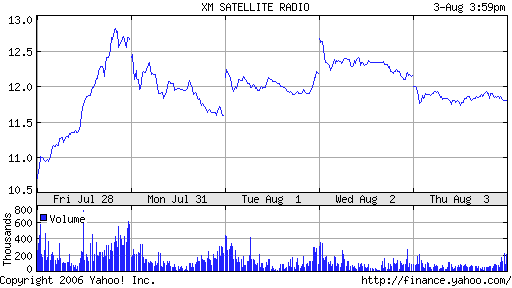
Resetting marketplace expectations lower, the continued need for operational financing (cash flow problems), and lingering investor concerns on actual demand for XM’s portfolio of services (Sirius captured market share from XM in the retail segments in the latter stage of the second quarter)—nevertheless, the Common Stock of XM gained $1.80 in the past week, closing 17.4% higher at $12.16 on August 2, 2006. Average daily trading volume jumped to approximately 16.7 million, double the average daily trading volume in the prior three months.

On Wednesday, August 2, 2006, XM and online search engine Google (GOOG-$375.39) announced an airwaves advertising pact. Terms were not disclosed, but as part of the agreement Google’s AdWord’s customers will be able to insert advertising across XM’s non-music commercial channels (i.e. talk-based shows).

The arrangement will help Google to increase ad-enabled sales across a new audience platform for its advertisers.

What’s in the deal for XM? Short-term, not much (save for getting investors excited about the fact that Google has now lent some well-needed credibility to XM’s satellite-radio business)—longer-term, it just might open-up a new revenue stream (by allowing XM to feature new advertisers while lowering the costs related to processing ads). Net ad sales revenue totaled $8.9 million, or approximately 4.0%, of the $227.9 million in net sales in the second quarter of 2006.

The 10Q Detective understands that the S.E.C. is involved in (higher-profile) backdated option scandals, but does the pre-announcement spike in the price and volume in XM’s Common Stock strike any of our readers as too timely?

  • "What's the frequency, Kenneth?" is your Benzedrine, uh-huh
  • I was brain-dead, locked out, numb, not up to speed
  • I thought I'd pegged you an idiot's dream
  • Tunnel vision from the outsider's screen
  • I never understood the frequency, uh-huh
  • You wore our expectations like an armored suit, uh-huh….”

“What's the Frequency, Kenneth?" is a song by the rock group REM from their 1994 album Monster. The title refers to the question one of two unknown assailants asked CBS anchorman Dan Rather as he assaulted him on Park Avenue in Manhattan in October 1986.

R.E.M. vocalist Michael Stipe said of the incident: "It remains the premier unsolved American surrealist act of the 20th century. It's a misunderstanding that was scarily random, media hyped and just plain bizarre."

The Common Stock of XM Satellite Radio gaining almost 17% on lackluster news—come on, S.E.C.—“What’s the frequency?”

Thursday, August 03, 2006

Halliburton Corp: Windfall of War


"In the councils of government, we must guard against the acquisition of unwarranted influence, whether sought or unsought, by the military industrial complex. The potential for the disastrous rise of misplaced power exists and will persist."


First described on January 17, 1961, former President Dwight D. Eisenhower warned of the irresponsible power of the military-industrial complex in his Farewell Address to the Nation.

Historians consistently rank Eisenhower among our top 10 presidents—and we “Like Ike, too!” The prescience in Eisenhower’s warning could not be better articulated than looking at Halliburton Company’s (HAL-$33.72) 2Q:06 filing with the SEC last week.

Oil services giant Halliburton is making money on more than drill bits and cement. Halliburton is the largest private contractor in Iraq. The Company’s Government and Infrastructure segment provides support services to military and civilian branches of governments throughout the world. The Government and Infrastructure segment's most significant contract [surprise!] is the worldwide United States Army logistics contract, known as LogCAP (Logistics Civil Augmentation Program).

Additionally, the Company is helping to rebuild the oilfields in Southern Iraq, with contracts like PCO Oil South (Project and Contracting Office, a Defense Department agency brought in to oversee the “RIO-2” construction after allegations of
“significant deficiencies” in Halliburton’s cost-estimating systems for prior billed work).

[Ed. note. The LogCap contract to provide support to our troops is the most recent of three mega-contracts awarded to the Company. First, there was the original $2.4 billion “Restore Iraqi Oil” (RIO) contract, which the Company received in secret without competitive bidding in March 2003; followed by the $1.2 billion RIO-2 contract, which was awarded to the Company, in January 2004, to continue with the restoration and servicing of the oilfields in Southern Iraq.

In his July 1970, chart-topping Vietnam War protest song, “War,” Edwin Starr wrote: "War! What is it good for? Absolutely nothing….”

Sadly, war is good for profits. From the rebuilding of the Balkans in the mid-1990s to the Middle East today, war has been good for Halliburton. For the first six months of FY 2006, Iraq-related work contributed approximately 22.4%, or $2.4 billion to consolidated revenue of $10.7 billion and $74 million to consolidated operating income of $1.47 billion.

Top-line contributions from the United States Government, resulting primarily from work performed in the Middle East, represented approximately 31%, or $6.5 billion, of consolidated revenue of approximately $21.0 billion in FY 2005. Iraq-related income totaled $175 million, primarily due to income from the award fees on definitive LogCAP task orders, settlement of ‘Dining Facility’ Contract (DFAC) problems, and other issues.

[Ed. note. In an earlier draft of his Farewell Address, President Eisenhower had originally called the cozy, cooperative relationship between defense contractors and the Government, the “military-industrial-congressional-complex”. Readers ought to take note that we have made it almost through this posting without mentioning Vice-President
Cheney, Halliburton , and White-House secret deals, in the same paragraph.]

Investment Analysis.

Albeit doubtful that Halliburton will be found in the portfolio of any “socially responsible” mutual fund (such as Domini Social Investments), the 10Q Detective believes that the stock holds investment merit at its current price:

  • The stock is off 19.7% from its (split-adjusted) 52-week high of $42.00 per share (April 20, 2006), as investors looked in the rear-view mirror at decreasing Government and Infrastructure backlog(s) in Iraq-related work and the material impact on future revenue when (speculation became fact) the U.S. Army announced that it would rebid the LogCAP III contract for logistical support that the Company’s Kellogg-Brown & Root division (KBR) previously provided in Iraq. However, KBR is eligible to bid on the future work, as the Army has determined it wants multiple service providers to perform the work.
  • Of interest, Halliburton has announced its intention to completely separate KBR, Inc. from Halliburton as expeditiously as possible through a tax-free dividend distribution of KBR, Inc. stock to Halliburton stockholders. Winnowing KBR from the Company will mitigate the risk of being too dependent on WAR for profits and—we believe--will also help to unlock the true value of the Energy Services and related-products units.
  • In our view, too, political unrest the world over, from Nigeria to the Middle East, will drive gas and oil prices much higher in coming months—look for of light, sweet crude oil futures to top $80 a barrel in the coming weeks. The demand for oil services and drilling industries (in other global locations) are in the beginning stages of a renewed, sustainable business upturn.

    During the first half of 2006, the Energy Services Group segment produced revenue of $6.1 billion and operating income of $1.5 billion, reflecting an operating margin of 25.1%. Revenue increased $1.4 billion or 30% over the prior year period, primarily driven by higher drilling activity in North America, the Middle East, the North Sea, and Russia.
  • In our opinion, the KBR – Iraqi issues are already reflected in the price, for the Common Stock currently trades at only 13.2 times its FY 2007 consensus estimates of $2.56 per share (which is well-below its average monthly, five-year P/E multiple of 23.84).
  • Foreign Corrupt Practices Act investigations, KBR bidding practices investigations, and allegations of misdoings in Iran —if investors can stomach the stench—there is the potential for a profitable trade in the Common Stock of Halliburton.

Saturday, July 29, 2006

"Sorry, Wrong Number." The New 'Pump & Dump' Stock Scheme.


The "Nigerian" 419 Letters, faxes, and e-mails (and text messages to mobile phones) looking for assistance in freeing up “millions of dollars” in foreign lands; International Lottery Scams asking for bank account details to facilitate revenue sharing of big winnings; Phishing e-mails spams and VoIP 'vishing’ sent by identity thieves intent on fraudulently capturing your personal information (credit card numbers, bank account information, Social Security number, passwords, or other sensitive information); and, Purchase scam services (offshore corporation lacking a U.S. address or bank account and in need of someone to take goods sent to their address and reship them overseas for a split percentage}—the common denominator in all of these schemes is to get the unsuspecting to part with their savings.

In August 2004, the Securities and Exchange Commission (SEC) first issued an investor alert warning about a new twist on the "pump and dump" stock-fraud scam– answering machine “wrong number” stock tips. We are not referring to the 1948 film, Sorry, Wrong Number, starring Barbara Stanwyck as a bedridden millionaire's daughter who overhears a plot for murder. The SEC became aware that messages were being left on answering machines (throughout the United States) saying that the price of a small, thinly traded company’s stock would shoot up soon. The caller makes it appear they believe they are leaving a message for a friend and do not realize they have dialed the “wrong number.” The message is designed to sound as if the speaker didn't realize that he or she was leaving the hot tip on the wrong machine:

  • "Hey Tracy, it's Debbie. I couldn't find your old number and Tammy says this is the new one. I hope it's the right one. Anyway, remember Eva, that hot stock exchange guy that I'm dating? He gave my father that stock tip on WLSF and it went from under a buck to like three bucks in two weeks and you were mad I didn't call you? Well I'm calling you now. This new company is supposed to be like the next Tommy Bahama and they’re making some big news announcement this week. The stock symbol is ... He says it’s cheap now. It's at like 50 cents—Sorry I’m eating but I’m starving—and it's going up to like 5 or 6 bucks this week so get as much as you can. Call me on my cell—I’m still in Orlando. It’s 407-XXX-XXXX. My Dad and I are buying a bunch tomorrow and I already called Kelly and Ron too. Anyway I miss you, give me a call. Bye."

    [Listen to one of the "wrong number" voicemails here.]

Regulators have since uncovered direct evidence implicating stock promoters and related parties who are being paid to leave these messages on hundreds, if not thousands, of answering machines in the hope that people will buy the stock and drive the price up. The people behind the scam own the stock and will then be able to sell it a profit after which the stock will fall when the calls stop.

These scams have also migrated to email and faxes. The SEC has also released ‘Investor Alert’ bulletins warning of similar cozenages that start out like this:

  • “ …Hey you!
    PLEASE don't tell anyone about this email, because if the SEC finds out, I could get in big trouble for passing on this information, maybe even go to jail.
    This is super important! I hope I have the right email for you. Your messages keep bouncing back because your mailbox is full, and I seem to remember this is your other account. I tried calling but you're not home…. arghh! OK here's the news.”


On May 3, 2005, The SEC filed two complaints in the United States District Court of the District of Columbia charging two voicemail broadcasters and associated individuals with the nationwide broadcasting of hundreds of thousands of fraudulent "wrong number" stock tip messages.

Michael O'Grady and two affiliated Augusta, Ga.-based telemarketing companies, Telephone Broadcast Company, LLC and Telephony Leasing Corporation, LLC, were charged with broadcasting "wrong number" touts of at least six microcap stocks. The complaint alleged that the messages were part of a larger scheme enabling Houston-based stock promoters to sell approximately $4.5 million of one of the touted stocks through a Tampa, Fla.-based broker-dealer. Authorities say the scheme drove up the price of each of the touted stocks, temporarily inflating their combined market capitalization (in just 26 days) by approximately $179 million.

According to the SEC, O'Grady himself profited from trading in three of the stocks. For example, on or about July 28, 2004, O’Grady purchased 10,000 shares of [despite its misleading name] a developmental stage company involved in adult stem cell technology, Maui General Store, Inc. (MAUG.OB-$0.043) at $0.68 per share and sold the shares on or about July 29, 2004, as the price spiked to $0.98 per share, realizing a $3,001 profit.

Without admitting or denying the allegations made by the Commission, O'Grady consented to a final judgment ordering him to pay $50,786 in disgorgement and prejudgment interest and a $25,000 penalty. The SEC's action against O'Grady was brought contemporaneously with a related action by the U. S. Attorney's Office for the District of Columbia in which O'Grady pled guilty to one count of criminal information charging him with obstruction of justice.

The scheme allegedly spawned a copycat scam involving thousands of similar phony voicemail messages promoting the shares of two small, thinly traded companies: Triton American Energy Corp. (TRAE.PK-$0.185), a small, Houston-based oil company, and Yap International, Inc. (YIPL), a provider of a wide range of wireless and communications solutions, now known as iPackets Int’l (IPKL.PK-$0.0017).

In this latter case, the SEC filed charges against David E. Whittemore of Dallas, his company Whittemore Management Inc (WMI), Peter S. Cahill of Houston and his company Clearlake Venture Group.

The complaint alleges that in July 2004, Cahill, who had acquired a material number of the outstanding shares of TRAE, contacted Whittemore to engage WMI’s services to broadcast voicemail messages touting the stock of TRAE.. Whittemore and WMI, who are in the business of using auto-dialing computers to broadcast prerecorded messages via telephone, agreed to broadcast messages for Cahill and his company Clearlake Venture Group.

On or about August 12, 2004, Cahill paid Whittemore 594,000 shares of TRAE stock in advance for his services. Whittemore later returned the TRAE shares to Cahill, who then paid Whittemore $142,000 in lieu of the returned stock.

On or about August 17, 18, 19, 31 and September 14, 2004 and other dates unknown, in furtherance of the scheme to defraud, Whittemore and WMI broadcast a series of false and misleading messages touting TRAE, leaving the following or a substantially similar message on telephone answering machines across the country:

  • “Hey David, it’s Kathy. Listen, honey, Jim wanted me to give you a call. I just put him on a plane and he didn't have time to call you himself, uh, but he wanted you to know…remember those guys that do those stock promos? They’re getting ready to start another one this week. Uhm, they just did, uh, shoot. Hang on there a minute, let me look here and see. Okay, the first one was CNDD, the other one was PWRM, and he said that the next one you can get in on was TRAE. Let me look here, uhm, yeah, TRAE. It’s an oil company. And, anyway, he said he thought that it’s gonna be their best stock promotion this year. It’s at 75 cents right now and I think it’s going to go up to like five or six bucks, or something like that. He said you needed to get in in the morning before the price starts going up ‘cause you definitely want in on this one. Give him a call later tonight, sweetheart, and, um, I think that’s it. I'll talk to you soon. Bye.”

Studies have shown that stock tips posted online, or 'inadvertently' left on voicemail, or sent over email, can have a significant effect on the stock market.

In the case of Kathy, David, and Jim--The messages had their intended effect, increasing the trading volume and share price of TRAE stock. During the voicemail scheme to defraud, the price of TRAE’s common stock, which had last traded at $.32 per share on August 6, 2004 with a trading volume of 10,000 shares, tripled to a high of $.97 per share with a trading volume of 756,000 shares on August 19, 2004, an increase in market capitalization of approximately $12 million.

Cahill profited by selling TRAE shares while the voicemails were being broadcast. Between approximately August 23 and September 14, 2004, Cahill sold 680,800 TRAE shares, generating proceeds of $508,056.

Similar fraudulent messages were left in late August and early September 2004 about the stock of YPIL. Between approximately August 19 and August 27, 2004, WMI sold 45,014 of these YPIL shares generating proceeds of approximately $37,070.

The messages had their intended effect, increasing the trading volume and share price of YPIL’s common stock. During the voicemail scheme to defraud, the price and trading volume the stock of YPIL, which had traded at $.68 per share with a trading volume of 7,380 shares on August 27, 2004, spiked to a high of $1.00 per share with a trading volume of 302,814 shares on September 1, 2004, an increase in market capitalization of approximately $10 million.

The Commission's complaint against Whittemore, WMI, Cahill and Clearlake seeks civil penalties, disgorgement of all ill-gotten gains plus prejudgment interest, and permanent injunctions barring future violations of Section 10(b) of the Exchange Act and Rule 10b-5 thereunder against all four defendants. This complaint is pending in federal court.

The SEC, like the FBI, “always gets their man”—or in this case, their woman. On July 27, 2006, the Commission filed charges against a Florida woman, Anna Boling (the alleged “Debbie” in the aforementioned fraudulent "wrong number" stock tip messages), her then husband, Roderic Boling, and stock promoter, Jeffrey Mills of Longwood, Florida and his company, Direct Results of Sweetwater, LLC, for the broadcasting of hundreds of thousands of Misleading Stock Tip Voicemail Messages.

In its action, the Commission seeks permanent injunctive relief, disgorgement of illegal profits with prejudgment interest, and civil monetary penalties based on each of the defendants' alleged violations of the antifraud provisions of the federal securities laws, specifically Section 10(b) of the Exchange Act and Rule 10b-5 thereunder, and Anna Boling’s alleged aiding and abetting of those violations.

To avoid being the victim of the Pump and Dump, keep in mind the following tips from the online watchdog, The Fraud Bureau, which monitors Internet fraud and/or deceptive business practices:

  1. Beware of unsolicited email or telephone calls. Only deal with people you know. If you have any questions about a penny stock, call your broker who can assist you in learning more about a stock.
  2. Don't make hasty decisions after speaking with a promoter or after hearing a tip.
  3. Don't believe any promise of great profits at no risk. No investment can deliver guaranteed profits at nominal risk.
  4. Don't believe in claims of inside information.
  5. Do your own research. Look at any recent press releases of the company and take the company at face value.

If after reading this article, you still find yourself the patsy to your own greed, look on the bright side: “Never cry over spilt milk. It could've been whiskey." [Maverick-the classic TV Western shown on ABC in the late 1950s, starring James Garner]

Thursday, July 27, 2006

Amazon.com's Profitability--"Much Ado about Everything"


’T is all men’s office to speak patience
To those that wring under the load of sorrow,
But no man’s virtue nor sufficiency
To be so moral when he shall endure
The like himself.
[Much Ado about Nothing. Act v. Sc. 1- William Skakespeare]

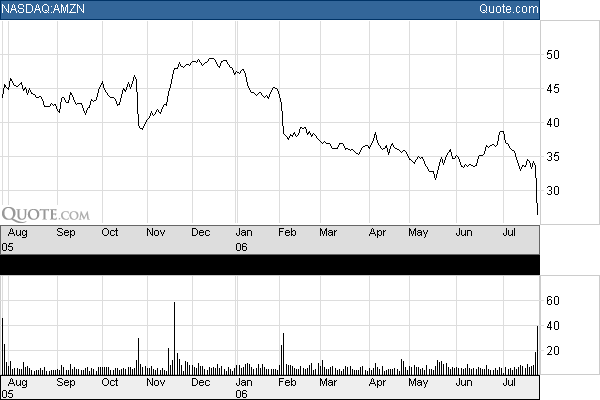
Weak results from Amazon.com Inc. (AMZN-$26.26) weighed heavily on trading Wednesday, as those investors of very melancholy disposition marched en masse to the exits, sending the shares down 21.82%, or $7.33 per share. The shares of the online retailer plummeted to a three-year low after the Company reported a 58% drop in second-quarter earnings and guided its full-year operating profits lower.

For the three months ended June 30, the Company reported a profit of $22 million, or 5 cents per share, compared with earnings of $52 million, or 12 cents per share in the prior year period, as higher operating costs offset a 22% rise in sales (to $2.14 billion).

Analysts polled by Thomson Financial were expecting second-quarter earnings of 7 cents per share on revenue of $2.1 billion.

Management cut its full-year operating income estimates to a range between $310 million and $440 million, down from a previous forecast of $390 million to $520 million.

In a conference call, management said operating income was hurt—and going forward into the 2H:06—margins will continue to be materially impacted, by the termination of the contract with Toys R Us Inc., the impact of free shipping promotions (for Amazon Prime club members), lower product prices, higher technology expenses, and the launch of new content (such as an online grocery store, toy store, and sporting goods store).

Piper Jaffray analyst, Safa Rashtchy, downgraded Amazon to under perform from market perform, saying that “while reduction of operating income guidance was expected, scope was larger than previously expected; it also takes Amazon further away from its goal of double-digit margins.” He cut his 66 cents 2006 EPS estimate to share-net of $0.55 and his 2007 EPS estimate from $0.96 to 86 cents. He also lowered his $38 stock price target to $25.00 per share.

Deutsche Bank analyst Jeetil Patel wrote in a note that while "overall investor sentiment surrounding the company (and its prospects) still appears to be acutely negative, we are nevertheless encouraged by some of the key trends in the 2Q results and momentum in the business."

Dan Geiman, an analyst at Seattle brokerage
McAdams Wright Regan, noted that gross margins dropped 187 basis points to 23.8% from a year ago, cutting quarterly operating margins by more than half, to 2.2% from 5.9% in the second quarter of 2005. In a research note published Wednesday, he called margin pressures and earnings erosion "both worrisome trends" but took a wait-and-see stance, saying: "We expect that the stock may move sideways for the next quarter or two, but further expect that there is modest upside in the near to intermediate term if — and it's still a big if — AMZN can stem the tide and start to generate some earnings momentum.”

Perhaps Bear Stearns’ consumer Internet analysts said it best: The ultimate question has been and remains, “when will the necessary investing subside and when will the model begin to demonstrate the leverage that many believe can be achieved? While we believe investors will ultimately see these investments pay off, the waiting is the hardest part….”

Bear Stearns is reducing its 2006 Year-End Target Price from $47 to $40 per share, but is maintaining its ‘Outperform Rating.’

The confluence of events that conspired to drive down Amazon’s Common Stock price has inspired little confidence in the Company’s management—unfortunate to the credibility of the Wall Street analysts that are lowering their ratings & target price (after the stock has already plunged), and for the stockholders who will now have to wait even longer to see this investment “pay off.”

[Ed. note. “Even a dead cat will bounce if dropped from high enough!" To our readers expecting to trade off a potential bottom in Amazon, it is our view that any bullish rally will be short-lived, for the Common Stock still sells at a princely 30 times forward 2007 consensus EPS estimates.]

Wednesday, July 26, 2006

"Stupid is as Stupid does."


After spending this weekend past shucking 10-Q filings to uncover some undiscovered pearls in which to invest, we admit that we came up short. Nevertheless, the 10Q Detective did uncover several instances of corporate newspeak—lending credence to con man Joseph ("Paper Collar" Joe) Bessimer famous quote: "There's a sucker born every minute...and two to take 'em.” [Ed. note. Before readers rush off to correct us, the evidence strongly suggests that P.T. Barnum never uttered those famous words.]

After many quarters of steady growth, during the second quarter of 2006, homebuilder Lennar Corp. (LEN-$45.22) experienced slower sales, higher cancellation rates and greater need for incentives and discounting. These factors contributed to lower backlog year-over-year and margin erosion, which will be realized in future quarters [i.e. declines in future profitability]. The Company said that its homebuilding activities in the second quarter were affected by a combination of factors found in many of its largest markets across the country, primarily:

· weakened demand due to changing homebuyer sentiment stemming from a view that now is not the best time to purchase a home;
· weakened demand due to the speculative real estate investor exiting the market;
· increased supply and pricing pressures due to speculative investors now selling previously purchased homes at reduced prices; and,
· increased supply due to purchasers of primary residences and speculative investors canceling existing contracts.

Despite these conditions, and the factors contributing to them, management “believes the fundamentals driving the homebuilding business remain strong and suggest a healthy long-term prognosis for the industry.”

Contrary to what management would have its shareholders believe, evidence continues to accumulate that the housing market is softening and it appears that the inventory of homes for sale may be starting to adversely impact housing prices.

The National Association of Realtors said today that existing-home sales were down 1.3% in June to a seasonally adjusted annual rate of 6.62 million units from 6.71 million in May. June's rate was down 8.9 percent from the 7.27-million-unit pace set a year earlier.

Additionally, inventories of unsold homes at the end of June swelled 3.8 percent to a record 3.73 million, representing 6.8 months of supply -- the largest since July 1997 -- from 6.4 months at the end of May.

“Stupid is as Stupid does.” [Forrest Gump]

Citing a weak sales environment for residential furniture, home furnishings’ maker, Stanley Furniture Company (STLY-$23.67) said that its sales in the second quarter ended July 1, 2006, fell 7.4 percent to $77.5 million and the Company’s net income came to $3.9 million, or 32 cents a share, down from $5.8 million, or share-net of 44 cents, a year earlier.

The Company also cut its profit outlook for the year, guiding Wall Street to a profit range of $1.52 to $1.61 a share and a sales range of between $323.5 million and $331 million. Analysts currently expect profit of $1.58 a share for this year on full-year sales of $324.7 million, according to Reuters estimates.

In the Company’s second quarter 10-Q filing with the SEC on July 18, management also cited a surge in low cost imported products, primarily from China, as a reason for declining sales and profitability.

“Imports have grown dramatically in the past few years and according to industry sources it is estimated that imports now account for over half of all residential wood furniture sold in the United States.”

In response to this trend, Stanley developed a blended strategy of combining its domestic manufacturing capabilities with an offshore sourcing program that incorporates selected imported component parts and finished items in its product line to lower aggregate production costs. According to management, sourced product represented approximately 34% of sales during the first six months of 2006 compared to 31% in 2005.

This integration was also “meant to provide design flexibility and to offer a better value to customers.” After admitting that the Company faced competitive pressure from Asian imports, management then goes on to state in the 10-Q that to offset unit volume declines, average selling prices were increased on its product offerings. [Ed. note. How does raising prices offer “better value to customers?”]

On July 17, 2006, management announced, too, that the Board of Directors increased its stock repurchase authorization to $50 million. From April 1, 2006 – July 1, 2006, Stanley had already repurchased 587,345 shares of Common Stock at an average price of $25.41 per share.

If this announcement is supposed to signal to investors that Stanley Furniture Company’s stock is cheap at its current price, our confidence was quickly dashed when we read that the Company has a great excuse hidden up its sleeve to explain away any future profit shortfalls:

“An outbreak of avian flu or similar epidemic in Asia or elsewhere may lower our sales and earnings by disrupting our supply chain in the countries impacted.” [10-K Annual Report]

"And that's all I have to say about that." [Forrest Gump]


Saturday, July 22, 2006

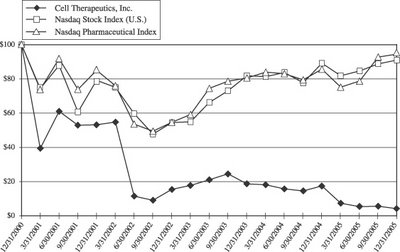
Cell Therapeutics: Cytotoxic to Shareholders?


A number of readers wrote to us after perusing our review on Abraxis Biosciences and queried us with a common concern—if Seattle-based biopharmaceutical company, Cell Therapeutics obtains regulatory approval for XYTOTAX (pronounced “Zi-o-taks”), will this pose direct competition to ABRAXANE?

A clinical and commercial assessment of late-stage cytotoxic agents (like XYTOTAX) for metastatic breast cancer and non-small cell lung cancer (NSCLC), in our opinion, would not prove to be direct competitive threats to ABRAXANE, but, to the contrary, would serve to facilitate physician (and insurance companies) acceptance of alternatives to existing treatment paradigms (and expand the commercial market for targeted therapies like ABRAXANE).

Separately, XYTOTAX would not be a direct competitor to ABRAXANE because the former is seeking its first FDA indication for NSCLC and the latter’s only approved indication (to date) is to treat metastatic breast cancer after a combination of chemotherapy fails or within six months of a relapse.

XYTOTAX is Cell Therapeutics (CTIC-$1.21) chief drug in development.

XYOTAX (paclitaxel poliglumex) is a biologically enhanced chemotherapeutic that links paclitaxel, the active ingredient in Taxol, to a biodegradable polyglutamate polymer, which results in a new chemical entity. When bound to the polymer, the chemotherapy is rendered inactive, potentially sparing normal tissue's exposure to high levels of unbound, active chemotherapy and its associated toxicities. Blood vessels in tumor tissue, unlike blood vessels in normal tissue, are porous to molecules like polyglutamate. Once inside the tumor cell, enzymes metabolize the protein polymer, releasing the paclitaxel chemotherapy.

Initially, the future looked promising for XYTOTAX. However, at the 2006 Annual Meeting of the American Society of Clinical Oncology (ASCO), a composite analysis of phase 3 STELLAR trials of XYOTAX in patients with NSCLC was presented. The outcome data (survival-days) indicated that if XYTOTAX were to reach the market, its patient population would be limited by gender (pre-menopausal female NSCLC patients, since estrogen appears to be the catalyst that makes the drug more effective) and performance status (“PS2”--women who have poor performance status). Unfortunate, for NSCLC patients and the Company, given that more than 50% of the NSCLC population is aged 65 or older.

Nonetheless, the Company is moving forward with the development of XYTOTAX. [Ed. note. In order to justify the generous salaries that the Company pays to its key executives—does the Company have any other alternative?]

After a meeting held with the FDA last month, management announced that the Company and the FDA agreed on a new drug application (NDA) route for XYOTAX for women with lung cancer. The FDA agreed to review an NDA submission based on interim results of the PIONEER trial (designed to test whether single agent XYOTAX provides improved overall survival compared to paclitaxel in chemotherapy-naïve women with NSCLC who are PS2, chemotherapy-naive women with advanced stage NSCLC) with the results of the STELLAR 3 and 4 trials to support the filing. Based on this feedback, if the PIONEER trial meets its pre-specified interim endpoint. The Company plans to submit an NDA in the first half of 2007 and would request a priority (six month) review based on the fast track designation, instead of the standard ten-to-twelve-months.

Nevertheless, our confidence in the agent’s commercial potential is not bolstered after reading that European regulators will allow the biotech drug maker to lower performance endpoints for XYOTAX in order to seek EU marketing approval. The Company said the European Medicines Agency's Scientific Advice Working Party "agreed in principle" that Cell Therapeutics can use a clinical trial where XYOTAX is shown to be not-inferior to other cancer drugs for approval, rather than being superior as originally planned.

Even with FDA approval, Cell Therapeutics may find its “restricted” NSCLC market difficult to penetrate, given tough competition from better-capitalized company’s like Sanofi-Aventis’ TAXOTERE (docetaxel) and Eli Lilly’s GEMZAR (gemcitabine). TAXOTERE is used to treat non-small cell lung carcinoma alone, or like GEMZAR, in combination such as cisplatin.

Additionally, drug-treatment paradigms are difficult to change. For example, despite limitations like adverse-events and poor outcomes, chemo-drugs like cisplatin and vincristine have been used to treat cancer for more than 30 years—and remain at the forefront of treatment. In particular for NSCLC, the last decade has borne witness to expanded drug options, including the introduction of adjuvant and neoadjuvant chemotherapy. Still, suitable therapeutics remain elusive, with five-year survival rates failing to improve—despite advances in drug development.

There are over a dozen NSCLC candidates in late- stage development, with almost half of the pipeline candidates molecular targeted therapies (MTT):

1. Genentech’s TARCEVA (erlotinib) is a small molecule tyrosine kinase inhibitor which works intracellularly to disrupt EGFR function, and has been shown to increase survival in lung cancer patients. The FDA for the second-line treatment of advanced non-small cell lung cancer recently approved TARCEVA.
2. Amgen's novel agent, ABX-EGF (panitumumab), is a human monoclonal antibody directed extracellularly against the epidermal growth factor receptor (EGFr). Phase II data shows outstanding toxicity profiles both for first-and-second line NSCLC. When approved, pricing is thought to be critical to panitumumab’s market success against other MTTs. [Ed. note. EGFR inhibitors show a predictive response best in those cancer patients present with the EGFR mutation—overexpression of EGFR.)
3. Genentech/Roche's AVASTIN (bevacizumab) is an anti-angiogenesis drug that works by blocking the signal protein vascular endothelial growth factor (VEGF) and is gaining prominence as an important tool in the treatment of cancer. The FDA first approved AVASTIN (in combination with intravenous 5-fluorouracil-based chemotherapy) for use in colon cancer in 2004. Early results from a large randomized clinical trial for patients with previously untreated advanced non-squamous, non-small cell lung cancer show that those patients who received AVASTIN in combination with standard chemotherapy lived longer than patients who received the same chemotherapy without AVASTIN.
4. Other MTT in NSCLC mid-to-late-stage development include AstraZeneca's ZACTIMA (vandetanib/ Phase 2 trials); NEXAVAR is the first oral multi-kinase inhibitor that targets both the tumor cell and tumor vasculature, and is currently in the (900) patient enrollment stage of a pivotal Phase 3 trial sponsored by Onyx Pharmaceuticals & AG Bayer designed to compare length of survival in NEXAVAR when co-administered with two chemotherapeutic agents - carboplatin and paclitaxel - versus carboplatin and paclitaxel alone; and, a multi-center phase 2 randomized trial presented at ASCO 2006 has demonstrated that Millennium Pharmaceuticals/Johnson & Johnson's VELCADE (bortezomib), the first in a new class of anticancer agents known as proteasome inhibitors, has significant activity as a single agent or in combination with Taxotere (docetaxel) in patients with non-small cell lung cancer (NSCLC) who have failed at least one prior regimen (toxicity issues are a concern).

Non-small cell lung cancer comprises over 75% of all lung cancers. In 2006, more than 338,000 cases of the disease will be diagnosed. Despite three decades of extensive R&D and chemotherapy use, the overall survival of NSCLC patients still remains below 12 months. The NSCLC death rate now exceeds that of breast, prostate and colon cancers combined.

Given that the unmet needs in NSCLC are so significant, the 10Q Detective argues that treatment paradigms will have to shift—and that multi-modal therapies will gain wider acceptance as first-line treatments. The corollary to our supposition is that there is a built-in market for all proven, next-generation cancer treatment agent—XYOTAX (lower toxicity and potentially increased effectiveness), too.

As best we know, Cell Therapeutics has no direct competitors that focus on the same core competencies (developing a protein based polymer drug like XYOTAX)

Our readers would also like to know the following: With a market capitalization just shy of $125 million, is the Common Stock of Cell Therapeutics an attractive buy at its current price of $1.21 per share?

Investment Risks and Considerations:

Credibility of Management Team. James A. Bianco, MD, a principal founder, President and CEO, his brother, Louis A. Bianco, Exec. V.P.-Finance & Administration, and the entire executive team have a reputation for being long on hype but short on results. Three years ago, James Bianco confidently predicted that XYOTAX would be on the market by 2005. Chastised [but not humbled], he is now calling for an FDA review—optimistically—in the 1Q:07.

Balance Sheet Weaknesses Limit Financial Flexibility. TRISENOX was, prior to its divestiture to Cephalon in July 2005, the Company’s only commercial product approved by the FDA, EMEA, and the Japanese Ministry of Health to treat patients with relapsed or refractory acute promyelocytic leukemia, or APL. As a result of the divestiture, there were no product sales for the three months ended March 31, 2006.

As of March 31, 2006, Cell Therapeutics had incurred aggregate net losses of approximately $(878.5) million since inception. Corporate expects to continue to incur additional operating losses for at least the next several years. Until XYTOTAX receives FDA marketing clearance, the Company has no material source of recurring revenue.

Without revenue generated from commercial sales, management anticipates that funding to support ongoing research, development and general operations will primarily come from public or private debt or equity financings, collaborations, milestones and licensing opportunities from current or future collaborators.

As of April 2006, the Company had approximately $83.5 million in cash and cash equivalents. However, contractual obligations (convertible notes, interest on notes, operating leases, and long-term debt) totaled $232.6 million.

Additionally, the Company still owes milestone payments [which management may be required to pay pursuant to the amended agreement with PG-TXL Company L.P] of $14.9 million, $5.4 million of which may be triggered in 2007 if XYOTAX is successful with current plans for registrations with the FDA and EMEA.

On June 21, 2006, the Company announced that it had signed a "step-up equity financing agreement" with the French bank, Societe Generale, in which the bank agreed to buy up to $72 million of new common shares of Cell Therapeutics and sell them on the Italian market.

For a Company in such a weakened financial condition, the 10Q Detective questions the dedication of management in shepherding XYOTAX through the FDA approval process. The aforementioned clinical disappointments and regulatory delays have done nothing to temper senior management’s avarice or willingness to enrich themselves at the expense of other shareholders.

James A. Bianco, MD and his brother, Louis Bianco, each earned $1.0 million, $932,647 and $439,030, $426,127 in FY 2005, FY 2004, respectively, in salaries, bonuses, and “other annual compensation.” These payments excluded restricted stock awards of $2.12 million and $1.0 million to each brother, respectively, in FY 2005.

Additionally, in the last three fiscal years—with the Company bleeding red ink—the Board of Directors saw it fit to approve perquisites for Dr. Bianco of $224,628 for travel and entertainment expenses, including the personal use of the corporate jet ((the aircraft was finally disposed of in November 2005—several months after corporate layoffs); and protective services provided for Dr. Bianco and his family as part of the Company’s corporate security program which totaled approximately $216,000, $1,242,201 and $939,537 for 2005, 2004 and 2003, respectively. The corporate security program was cancelled in August 2005.

This should aggravate shareholders, too: The compensation paid to Dr. Bianco during fiscal 2005 that was not performance-based under Section 162(m) exceeded the $1 million dollar limit per officer by approximately $485,000. The Company will not be able to take a federal income tax deduction for this excess amount. [Ed. note. Not that the Company had any profit to worry about!]

As mentioned, in late 2005, the Company sold the corporate plane, eliminated the security program, and gave pink slips to 75 employees. Doing so, the Company is hoping to cut its cash burn rate to approximately $8.0 million per month. In the 1Q:06, the cash burn rate was approximately $8.8 million [Ed. note. Perchance if the Board froze executive salaries, the Company might be able to lower its burn rate to the desired target.]

The Company faces direct and intense competition from better-capitalized competitors in the biotechnology and pharmaceutical industries, and must deal, too, with managed health-care and related-cost containment issues. Aside from the aforementioned therapeutic modalilities with clinically proven outcomes data, Cell Therapeutics will have to negotiate with managed care organizations predisposed to using generic (cheaper) alternatives, including the taxanes—generic paclitaxel (introduced in the U.S. in December 2004) and TAXOTERE (docetaxel), which goes off-patent in 2008.

Pipeline and Portfolio Risks. In addition to XYTOTAX, the Company is also developing pixantrone (pick-san-troan), a novel anthracycline derivative, for the treatment of non-Hodgkin’s lymphoma, or NHL. Preclinical data and clinical studies in more than 175 patients indicate that pixantrone is easy to administer, may exhibit significantly lower potential for cardiac toxicity, and may have more potent anti-tumor activity than marketed anthracyclines (like doxorubicin).

Anthracyclines have been shown to be very active clinically in a number of tumor types. However, they are usually associated with cumulative heart damage that prevents them from being used in a large proportion of patients. Pixantrone has been designed (by altering chemical groups thought to be associated for free radical production) to reduce the potential for these severe cardiotoxicities, as well as to potentially increase activity and simplified administration compared to the currently marketed anthracyclines

Management is targeting an interim analysis from its ongoing phase III study of pixantrone in the 3Q:06, and depending on the results of this analysis, a second interim analysis may be performed in the first half of 2007.

Additionally, Cell Therapeutics is working on CT-2106, a polyglutamate camptothecin conjugate, which is in the phase II component of a phase I/II trial in combination with 5FU/LV for the treatment of colorectal cancer relapsing following FOLFOX therapy and in a phase II trial in ovarian cancer.

Preliminary data of the phase I study of CT-2106 for patients with advanced solid tumor malignancies were presented at ASCO 2006 and successfully showed that the novel conjugate appeared to be well tolerated, with reduced bladder toxicities that characterize the parent camptothecin molecule.

Investor attention is focused on XYTOTAX—and rightly so. Given that the three STELLAR phase III clinical trials for the treatment of NSCLC did not meet their primary endpoint, without a successful PIONEER trial or positive interim results from the PIONEER trial, the 10Q Detective does not expect a favorable regulatory review from the FDA.

We remain concerned, too, with the regulatory strategy presented before the European Union: the aforementioned agreement “in principle" that Cell Therapeutics can use a clinical trial where XYOTAX is shown to be not-inferior to other cancer drugs for approval, rather than being superior as originally planned. At minimum, in our view, such an approach will pose future commercial risk to XYOTAX, for the Company is sacrificing potential sales to secure EU approval. [i.e. Competitors will position XYOTAX as a drug ‘of last resort.’]

Valuation Thesis.

We believe that there is significant risk to owning Cell Therapeutics, and its ability to continue as a going concern is dependent on the ultimate success/failure of XYTOTAX. That said, we have calculated a sum of the parts valuation of Cell Therapeutics’ intrinsic worth (with our expectations calibrated to reflect XYTOTAX’s regulatory approval and risk-adjusted for the potential maximum revenue, costs, time to approval, and probability of approval for the two drugs in the pipeline).

Our sum-of-the-parts valuation assigns an enterprise value of $0.74 per share. Assets include $1.30 for XYTOTAX, $0.47 for pixantrone, and $0.42 for CT-2106—which are offset by a negative cash position of $1.45 per share.

Like we said, the only stakeholders being enriched at Cell Therapeutics are Bianco & Company. They remind us of deer ticks, who will just keep sucking the life blood until they become so engorged, they just fall off their victims—still and all, plump and satiated.

As for shareholders on the outside looking in, look up the oncology term cachexia—for, in our view, that is what is what the future holds in store for shareholders' valuations.

Monday, July 17, 2006

Abraxis BioScience: A SPARC for Explosive Growth?


Abraxis BioScience, Inc. (ABBI-$21.45) provides a unique opportunity for investment in a biopharmaceutical company revolutionizing cancer therapy with its proprietary nanotechnology platform. Abaxis’ nanoparticle albumin-bound, or nab technology, exploits the natural properties of a human protein, albumin, for drug delivery. For example, by wrapping albumin around active drug and creating particles of approximately 130 nanometers, the Company has found a way to eliminate the need for solvents and deliver higher concentrations of (tumor-targeting) chemotherapy without the solvent-related toxicities compared with solvent-based taxanes.

Angiogenesis inhibitors (drugs that prevent the growth of new blood vessels), antisense therapy (genetic code blockers that turn off oncogenes), and tyrosine kinase enzyme inhibitors (inhibiting or slowing the division of targeted cancer cells)—three in a number of promising cancer therapies. Tumors, however, have adapted several mechanisms to meet their increasing need for nutrients.

Tumors are known to naturally "feed" by taking in and retaining albumin-bound nutrients. It has recently been discovered that tumors secrete a specialized protein called SPARC (Secreted Protein Acidic and Rich in Cysteine) into the tumor's interstitium that acts as a highly charged receptor. The SPARC protein specifically binds albumin-bound nutrients and concentrates them within the tumor's interstitium to prevent nutrients from diffusing outside the tumor cell.

Abraxis’ nanoparticle drug therapy exploits tumor vascular biology by delivering (concentrated) albumin-bound cytotoxic drugs preferentially to all tumors (secreting the SPARC protein) as a nutrient.

In January 2005, Abraxis received approval to market a first-in-class "protein-bound particle" drug. ABRAXANE, consisting only of albumin-bound paclitaxel nanoparticles (and free of toxic solvents), is indicated for the treatment of breast cancer after failure of combination chemotherapy for metastatic disease or relapse within 6 months of adjuvant chemotherapy.

Paclitaxel (originally derived from the bark of the Pacific Yew tree in the early 1960s) is known for its ability to produce hypersensitivity reactions, and these may occur in 20%-to-40% of patients. The drug has limited aqueous solubility and is commercially available as TAXOL as a non-aqueous concentrate containing the solvent, Cremophor EL (itself a mixture of hydrogenated castor oils) and ethanol as a co-solvent. Cremophor EL is believed to be responsible for producing much of the hypersensitivity reactions.

Toxicities associated with taxane-based chemotherapy include nausea and vomiting, severe myelosuppression, prolonged peripheral neuropathy, myalgias, and severe edema.

ABRAXANE is an important therapeutic breakthrough, since it addresses the toxicities associated with solvents in taxane-based chemotherapy. Additionally, since severe anaphylactic reactions are rare, pre-treatment with corticosteroids and antihistamines can be minimized.

Permitting more frequent dosing improves rapid and higher bioavailability of paclitaxel compared to Cremophor-paclitaxel (Taxol) formulations, this next-generation taxane is able to deliver 50% more drug to the tumor site.

As of December 31, 2005, Abraxis had active patient enrollment in ten clinical studies with ABRAXANE for breast cancer, including monotherapy in first-line metastatic breast cancer, in combination with Herceptin in HER 2 positive patients; in combination with Roche Labs’ Xeloda (Capecitabine) or with with Navelbin in first-line metastatic breast cancer; and, in weekly dosing in neoadjuvant breast cancer.

The Company has embarked upon an aggressive and comprehensive clinical development plan (investigator-initiated studies) to maximize the commercial potential of ABRAXANE. As of December 31, 2005, the drug is undergoing numerous other clinical studies in various stages of testing and development to determine its effectiveness against other cancers, including ovarian (6); prostate (5); G.I., pancreatic, head and neck, and cervical (15), and (12) non-small cell lung cancer (the most common form of lung cancer, accounting for approximately 87 percent of all lung cancer cases).

In addition to further investigation with ABRAXANE, the Company has developed an extensive pipeline that includes other promising drug candidates in oncology (thirteen compounds in phase 1 or 2 clinical trials) and a cardiovascular portfolio.

Approximately 800,000 procedures of coronary artery stenting are performed in the United States alone every year. Prospective studies of Interventional procedures have been plagued by Restenosis (in up to 50% of patients) due to the formation of endothelial tissue overgrowth at the lesion site. As opposed to bare metal, drug-eluting stents that are covered with a medicine that is slowly dispersed [were initially hailed by the medical community] as the curative in suppressing the restenosis reaction. (Sirolimus and paclitaxel are the two drugs used in coatings which are currently FDA approved in the United States). However, attention has been recently focused on—sometimes fatal—late thrombotic complications related to drug eluting stents that are being reported in increasing numbers (after discontinuation of concomitant oral platelet therapy).

Abraxis is developing the technology for potential use in cardiology where nab paclitaxel has been shown to significantly reduce coronary artery restenosis. According to corporate, the Company has initiated phase 2 clinical trials in patients with coronary artery disease with single dose therapy (COROXANE) following balloon angioplasty and stenting and is hopeful that clinical findings will corroborate the positive preclinical data.

Peripheral artery disease of the lower extremities is common in older adults with significant morbidity. Similar to coronary artery disease, this disorder is typically caused by thickening of the blood vessel wall that limits blood flow to the legs, particularly due to narrowing or closure of the superficial femoral artery. Currently the standard treatment is angioplasty alone. Surgical placement of bare metal stents or tubes within the blood vessel has had limited success, most often due to the tube breaking. Phase 2 studies are focusing on the use of COROXANE along with angioplasty of the affected blood vessel.

Abraxis also has numerous discovery product candidates for various indications such as anesthesia, oncology and transplantation. The Company believes the application of its nab technology will serve as the platform for the development of numerous drugs for the treatment of life-threatening diseases.

Drug delivery remains a challenge in the management of cancer. Until recently, approaches focused on technologies such as liposomes to overcome the poor solubility of cytotoxics and monoclonal antibodies to target cytotoxic agents to cancer cells. In our opinion, Abraxis’ approach of facilitating the desired cellular entry by harnessing protein transduction domains (PTDs), heralds an exciting new approach in drug delivery technology.

According to analysts, the market value of worldwide cancer drug delivery technologies has been estimated at $7.5 billion rising to $18.4 billion by the year 2010 and $38.5 billion by the year 2015 (albeit the market value of drug delivery technologies and the anticancer drugs are difficult to separate).

Additionally, driven by this explosion in novel therapeutic options, the chemotherapy market (valued around US$42 billion) is currently the fastest growing in the pharmaceutical industry.

Taxanes are one of the most widely used chemotherapy agents, with an estimated current use by approximately 325,000 patients in the United States alone and an estimated current worldwide market size approaching $2.0 billion.

ABRAXANE is well positioned to capture a large slice of the chemo pie. Other than in Japan, Abraxis owns the global rights to ABRAXANE.

Launched in February 2005 (by a novice sales force with no published FDA-approved data at the time of launch & a confusing new insurance re-imbursement environment), ABRAXANE still achieved 2005 net sales of $133.7 million in the 11 months following its launch for its initial indication in the treatment of metastatic breast cancer.

On April 26, 2006, the Company entered into a Co-Promotion Agreement with AstraZeneca. Under the Agreement, both companies will co-promote ABRAXANE in the United States for a term of five and one-half years beginning July 1, 2006. AstraZeneca will provide sales representatives to support Abraxane and will fund half of the promotional and advertising program

Abraxis management forecasts that net sales of ABRAXANE will be in excess of $200 million in FY 2006—and could rise to $500 million within three years (just for the breast cancer indication)! [Ed. note. internal reports show that 68 out of 75 or 91% of physicians surveyed anticipate increasing their ABRAXANE usage in the coming months.]

In our opinion, the nab tumor targeting technology has been validated by the successful launch of ABRAXANE and the drug represents the future of Abraxis. This product has all the hallmarks of a blockbuster and could drive the Company’s topline growth for years to come.

Abraxis believes it can apply its nab tumor targeting technology to numerous chemotherapy agents. By exploiting the abnormal vascular growth (angiogenesis) and the overexpression of albumin-binding proteins (gp60 and SPARC) in advanced tumor cells and by overcoming water insolubility of many active chemotherapy agents, corporate believes that its technology may revolutionize the delivery of chemotherapy agents to cancer patients.

Next up for clinical investigation, the 10Q Detective sees Sanofi-Aventis Pharmaceutical’s dominant chemotherapy agent, Taxotere (docetaxel).
.
At the June 2006, American Society of Clinical Oncology (ASCO) meeting, the Company presented a pre-clinical study (Poster #5438; Title: Enhanced efficacy and safety of nanoparticle albumin-bound nab-docetaxel versus Taxotere) applied nab technology to docetaxel and in pre-clinical models of colon cancer compared nab-docetaxel with Taxotere (docetaxel injection). The study suggested that nab-docetaxel showed significantly greater antitumor activity against colon tumor versus Taxotere stents used to treat obstructed coronary arteries, as it is believed that sirolimus-eluting stents (marketed by Cordis as the Cypher stent) are less likely to cause restonosis, too. The anti-thrombin inhibitor rapamycin is currently under review by Abraxis—as nab rapamycin.

In addition to its oncology line (ABRAXANE & injectibles), Abraxis also profitably markets a line of generic anti-infectives and critical care products, which contributed $52.8 million and $45.3 million, respectively, to total net sales of $143.7 million for the first quarter ended March 31, 2006.

Together with a number of anti-infective (injectibles) with ANDAs In the FDA product pipeline are generic Arixtra (an anticoagulant called Fondaparinux—derived from heparin—that is given subcutaneously daily) and Lovenox (Enoxaparin, which is a low molecular weight heparin)—both of which are have big commercial opportunities for preventing blood clots and of deep vein thrombosis.

The Company, however, is not without its share of controversies. On November 27, 2005, the Company was borne out of a merger between privately held American BioScience (ABI), a drug-delivery development company, and publicly-traded American Pharmaceutical Partners (APP), a specialty pharmaceutical company that manufactured and sold injectable pharmaceutical products.

Based on American Pharmaceutical's Nov. 28 closing price of $39.25 per share, the combined entities’ share price has fallen 45.35%, with the primary concerns being (1) the dilutive effect that the transaction will have on minority shareholders and (ii) the fact that the merger is expected to be dilutive to EPS over the next five years, too.

Approximately 134.1 million shares of APP were issued to ABI shareholders in connection with the merger, substantially diluting the percentage ownership interests of current APP stockholders.

Dr. Soon-Shiong, CEO and Executive Chairman, of APP, was also the President, CEO, and a Director of ABI (and the controlling stockholder of APP with approximately 98.9% of the outstanding shares of ABI). Following the merger, Dr. Soon-Shiong and his affiliated entities beneficially owned 83.3% of the outstanding shares of Abraxis.

What also concerns, the 10Q Detective, is that Dr. Soon-Shiong has a “Martha Stewart” complex. For example, despite knocking down more than $825,000 in salary & bonus last year, the Company provided Dr. Soon-Shiong with the use of a car and a trained security driver, security systems for his residences, and 24 hour personal and family protection services at his office and residences and on other appropriate occasions. The aggregate costs to Abraxis (stockholders) for providing these systems and services in 2005 was $355,151—more than nine-fold the cost that $85.1 billion titan, Genentech (DNA-$80.75) spent on protective services for its CEO and Chairman, Arthur D. Levinson, Ph.D. [Ed. note. Perchance Dr. Soon-Shiong is fearful that the People’s Republic of China is looking to kidnap him for his Company’s nab technology!]

Nonetheless, the Common Stock price of Abraxis is such a screaming BUY—we do not mind looking askance at this piggish display.

Goldman Sachs calculated the enterprise value of Abraxis based on indications of net present value of free cash flow from the beginning of December 2005 through the end of 2030 (plus indications of net present value of terminal values for Abraxis). Indications of net present value of free cash flows used discount rates of 14 percent Terminal values in the year 2030 were based on perpetuity growth rates ranging from 0% to 4%. These terminal values were then discounted to calculate implied indications of present values using discount rates at 14 percent. Just for existing ABRANE indications (worldwide), milestone payments based on existing agreements, and the Company’s existing (injectible) Generic business’ (less corporate expenses & R&D), Abraxis’ total enterprise value was calculated to be $9.93 billion—or $62.53 per share!

In the opinion of the 10Q Detective, Goldman Sachs’ analysis though accurate—discounts the remarkable (global) growth potential of Abraxis’ deep product development pipeline that leverages the revolutionary technology built-on the company's nab platform. Additionally, we believe that the Company is well positioned to fund the R&D necessary to fuel this long-term value by capitalizing on the strong financial position of its hospital-based portfolio of injectables business. BUY.


Investment Risks:

Entities affiliated with Dr. Soon-Shiong own a significant percentage of Abraxis’ Common Stock and could exercise significant influence over matters requiring stockholder approval, regardless of the wishes of other stockholders. As of May 8, 2006, entities affiliated with the chief executive officer owned approximately 84.2% of Abraxis’ Common Stock. Accordingly, they have the ability to significantly influence all matters requiring stockholder approval, including the election and removal of directors and approval of significant corporate transactions such as mergers, consolidations and sales of assets. Additionally, this significant concentration of stock ownership may adversely affect the market for and trading price of the Company’s Common Stock if investors perceive that conflicts of interest may exist or arise.

The success of ABRAXANE in the Phase III trial for metastatic breast cancer may not be representative of the future clinical trial results for ABRAXANE with respect to other clinical indications. The results from clinical, pre-clinical studies and early clinical trials conducted to date may not be predictive of results to be obtained in later clinical trials, including those ongoing at present. Further, the commencement and completion of clinical trials may be delayed by many factors that are beyond our control, including slower than anticipated patient enrollment and unforeseen adverse events.

Clinical and regulatory risks—if Abraxis is unable to develop and commercialize new products, the Company’s financial condition will deteriorate. Profit margins for a pharmaceutical product generally decline as new competitors enter the market. As a result, future corporate success will depend on the Company’s ability to commercialize the product candidates currently in development (as well as developing new products in a timely and cost-effective manner). Additionally, failure to receive the necessary regulatory approvals of ABRAXANE in Europe and other global markets would have a similar deleterious effect on the Company’s future financial condition (and the calculated enterprise value).

Technological obsolescence--given recent advances in combinatorial chemistry, high throughput screening approaches being used are identifying potential Cremophor EL-free paclitaxel formulations that replace Cremophor with other excipients or excipient combinations (while retaining ethanol as a co-solvent). The Company anticipates that future net sales of ABRAXANE will represent a higher percentage of aggregate sales ($30.1 million in sales in the 1Q:06, represented approximately 20.9% of total net sales) in coming years. However, a number of pharmaceutical companies are working to develop alternative formulations of paclitaxel and other cancer drugs and therapies, any of which may compete directly or indirectly with ABRAXANE and which might adversely affect the commercial success of ABRAXANE.

Friday, July 14, 2006

American Woodmark: Executives Win our First Golden Fleece Award.


One of the greatest of the England’s Romantic poets, a man of letters, and addicted to opium for most of his adult life, Samuel Taylor Coleridge (1772 – 1834) wrote: “Let us have a little less of "hands across the sea," and a little more of that elemental distrust that is the security of nations. War loves to come like a thief in the night; professions of eternal amity provide the night.

In the Middle East, distrust breeds more distrust—which spawns endless conflicts. The military wing of Hezbollah (Islamic: “Party of God”) infiltrated Israel's northern border July 12, killing three soldiers and capturing two. The Hezbollah raid mirrored one carried out by Hamas, the Palestinian group that abducted an Israeli soldier June 25.

In response, Israel's stated diplomatic position is that it is looking to completely remove any Hezbollah presence in southern Lebanon. Israeli army chief warned, “nothing is safe” in Lebanon.

Israel jets are pounding Hezbollah strongholds in Southern Lebanon, a highway linking the Lebanese capital to Damascus, and Beirut's international airport for the third time in 24 hours. The Israeli Defense Force has also placed a blockade on Lebanese air, land and sea routes.

The Syrian-backed Lebanese Hezbollah militia has fired about 140 rockets into northern Israel in the past 48 hours, including one that reached Haifa (Israel’s third-largest city and 45 kilometers from the Lebanese border) for the first-time late yesterday. This sends an ominous signal to Israeli military intelligence. Hezbollah has long pledged that its overall mission is the complete destruction of Israel (and to drive the Jews into the Sea).

And the three-day conflict is escalating—ah…let’s call it what it is—WAR!

It has long been known that Iran (with its own anti-Semitic issues and Nuclear ambitions) has provided financial aid to terrorist groups like Hezbollah and Hamas. Military intelligence (knew two years ago) confirms, too, that Iran has supplied Hezbollah with solid-fuel, Zelzal-2 missiles with a 200-km range. The rockets are not very accurate, for they do not have a self-guidance system. Noneless, packed with explosive warheads weighing up to 600 kilograms, the Zelzal-2 missiles are intended to strike broad targets such as communities and cities—and to inflict as many casualties and property damage as possible. Iran’s role darkerns further, too, as rumors circulate that the two recently captured Israeli soldiers are being moved to Tehran.

If history is any guide, do not expect a settlement of this “conflict” to play out on the World Stage: (i) The only resolution from the United Nations Security Council demanded that Israel end its “disproportionate use of force;” (ii) The European Union stated that Israel has no justification for its air and sea blockade on Lebanon. The EU presidency added, “Actions, which are contrary to international humanitarian law, can only aggravate the vicious circle of violence and retribution;” and, (iii) Russia, Italy and France have all agreed with the EU, calling Israel’s actions against Lebanon “disproportionate.”

The good news, despite the potential for the fighting in Lebanon to threaten a broader conflict in the Middle East—Syria & Golan Heights dispute—the U.S. backed Arab regimes like Egypt and Jordan are sitting on the sidelines, professing that they would like to see a peaceful settlement.

Intensifying conflict in the Middle East (sectarian strife in Iraq, too) and concerns about Nigeria oil supplies being cut by the country's rebels recent activities are raising concerns of possible supply disruptions. Light sweet crude for August delivery was as high as $78.40 a barrel in trading on the New York Mercantile Exchange. By midmorning in Europe, however, the price was $77.45, up 75 cents from Thursday's record settlement of $76.70 a barrel.

On Wall Street, stock market futures on Friday were pointing to a modest rebound following two days of heavy losses in the markets, with traders to focus on General Electric earnings and retail-sales data. Nonetheless, we suspect as trading dries up later in the day, the major stock indices will dip south towards the close.

Here at home in the Northeast, with the weather expected to soar into the 90’s this weekend, the Wall Street elite have more pressing problemswhat time should they retreat from their offices—to beat the mass exodus and inclined traffic—and hit the roadways to their summer homes?

The Hamptons (pristine beaches and sophisticated nightlife), Fire Island (the “don’t ask – don’t tell” crowd), and, Martha’s Vineyard and Nantucket, the bucolic Massachusetts vacation areas frequented by as many high-profile celebrities, politicians as business executives. [Sorry—according to our sources, luxury properties (with high-speed Internet access) renting for $150,000 a month on Martha's Vineyard were gone by January.]

Given the gravitas of many of our recent articles, the 10Q Detective thought it might be fun to inject some levity in today’s entry. Our method is to look back at the pages and pages of SEC filings that we have read this past week, and then to offer up to our readers notice of whom is the winner of our first Golden Fleece award. (First established in 1975, by the late Senator from Wisconsin, William Proxmire, the Golden Fleece was awarded to those public officials he judged to be wasting public monies.)

The first 10Q Detective Golden Fleece award is presented to the executives of cabinet maker American Woodmark Corp. (AMWD-$32.34). The summary Compensation (Salary + Cash Bonus + Other Annual Compensation + LT Option Awards/Current Value) earned/awarded to James J. Gosa, Chairman & CEO (in FY 2004), Ian J. Sole, former Senior Vice President, Sales and Marketing (in FY 2004), and, Jonathan H. Wolk, CFO (in FY 2006) totaled $1.6 million, $691,359.00, $545,067.00, respectively. Despite the gobs of monies earned by these executives, they still felt it necessary to ask for—and of course, receive—discounts on cabinet purchases made by each executive.


1. Mr. Gosa received a $6,144 discount on cabinet purchases made for the FY ended April 30, 2004;
2. Mr. Sole received a $2,762 discount on cabinet purchases made for the FY ended April 30, 2004; and,
3. Mr. Wolk received a $4,885 discount on cabinet purchases made for the FY ended April 30, 2006.

Not disclosed is if each man also received a tax-gross-up adjustment for the 5.0% sales tax paid for the cabinets?
The 10Q Detective welcomes nominations for future Golden Fleece awards from our readers.

Wednesday, July 12, 2006

British Petroleum: skandale,скандал,escándalo,醜聞, 醜聞, (الاسم) فضيحه‏ , A Scandal in Any Language!


"Far from trying to hide the facts, my effort throughout has been to discover the facts—and to lay those facts before the appropriate law enforcement authorities so that justice could be done and the guilty dealt with." Richard Milhous Nixon, the 37th President of the United States (1969 – 1974), quoted prior to his resignation in the face of imminent impeachment related to the Watergate first break-in and the subsequent Watergate scandal....

Last month, the U.S. Commodity Futures Trading Commission (CFTC) called into question the reputation of the proprietary trading business of the London-based energy giant, BP plc (BP-$71.37). On June 28, 2006, the CFTC filed a Civil Complaint in a Chicago federal court against BP Products North America, Inc., a wholly owned subsidiary of BP. The CFTC alleged that BP traders “with the knowledge, advice, and consent of senior management,” among other things, manipulated the price of February 2004 TET physical propane by illegally cornering up to an estimated 88% of the U.S. propane market by late February 2004. [Ed note. Entering February, BP owned nearly 50% of available physical propane at the TET location.]

The company made $2.97 billion in profit last year from its trading operations, about 13 percent of its 2005 net income of $22.34 billion.

Sold compressed in cylinders of various sizes, propane is a popular fuel used primarily to heat rural homes and businesses. During the winter months, much of the demand for propane is concentrated in the Northeast and the Great Lakes regions of the upper Midwest, in rural areas absent natural-gas distribution networks. This market is served by the Texas Eastern Products Pipeline Co., a pipeline and storage network that runs from Mont Belvieu, Texas, through Ohio and into New York, Pennsylvania and Illinois. Traders call propane running along this line "TET propane."

BP is the leading supplier of natural gas liquids, including propane, in the USA, generating $5 billion in annual sales, according to the company.

Internal BP documents obtained by the CFTC show that a team of BP Houston-based traders sought to establish a long February propane position, withhold a portion of that propane from the market, and artificially drive up the price of propane.

BP’s scheme to corner the market allegedly caused the price of TET propane to become artificially high. By cornering the market, the clandestine trading operation was able to dictate prices to short-sellers seeking to cover their open positions. The CFTC asserts that on or about February 27, 2004, BP’s actions had successfully pushed up the price of propane (briefly) to 94 cents a gallon— a fifty percent price hike that would not otherwise have been reached under the normal pressures of supply and demand.

The CFTC complaint further alleges that by cornering the TET propane market, BP employees sought to generate a profit for BP of at least $20 million “with potential for upside from there.”

Internal BP reports show that the traders calculated odds of a loss from the strategy at 20% and put the potential return anywhere from a $5 million loss to a $15 million gain, the internal report shows.

Ironically, BP lost money when rising prices and trading volumes exceeded smaller trading partners' credit limits, leaving the company with large, expensive stockpiles that plummeted in value at month's end, when that month's futures contracts expired.

Adding to BP's disappointment, the CFTC says, another unidentified propane trader unexpectedly dumped large supplies on the market at month's end, enabling it to collect BP's anticipated profits.

Court documents also reveal recordings of phone conversations between BP traders that show their intent while planning and carrying out the alleged scheme. On phone conversations in early February, for example, Dennis Abbott, one of the Houston-based traders, and Mark Radley, trading manager of BP's natural gas liquids business, discussed their getting others in management to approve of the plan.

Of course, BP denies that it ever rigged propane prices or engaged in illegal trading schemes.

"Market manipulation did not occur," BP spokesman Ronnie Chappell said. "We are prepared to make and prove that case in the courts ... In this situation we investigated the trades in question and cooperated fully with the CFTC investigation. We will assist the Department of Justice in its ongoing investigation," he added.

[Ed. note. Based on its own internal findings, BP published a confidential manual for its traders on how BP could profit in the future from the February 2004 propane debacle, fittingly called, NGL Trade Lessons Learned.]

BP's own investigation resulted in the dismissal of three employees [Abbott, too] for “failure to follow its trading policies,” but the company declined to provide details, saying only that they have since taken steps to strengthen supervision of their trading activities.

Do any of our readers buy into Ronnie Chappell’s transparent insincerity?

Court documents show that BP has been about as cooperative as (“I am not a crook”) President Richard M. Nixon during the Watergate hearings.

As far as Chappell’s veracity—about as believable as Nixon’s secretary, , Rose Mary Woods, when asked why there was a crucial, 18½ minute gap on one of the subpoenaed tapes given in evidence to Watergate investigators, saying “she had accidentally erased the tape by pushing the wrong foot pedal on her tape player while answering the phone.”

The 10Q Detective, traditionally the chronicler of the brackish behavior and pecuniary offenses sired in the boardrooms of Corporate America, thought that our readers (who are paying $3.00 a gallon for gasoline at the pump) might find some glee in this tale of greed gone amiss on the Houston trading floor of energy giant BP (ironically, the home of Enron).

[Ed. note. Speaking of Enron--We caught the following headline on the death of the Enron founder: "Kenneth Lay Dead at age 64." The verb lie means to be in a horizontal position; whereas, the verb lay means to put (something) in esp. a flat or horizontal position. Ergo, when Kenneth died, the proper headline should have read: "Kenneth Lies Dead at Age 64!"]

Post-script:
Abbott, 34, admitted his participation in the manipulation scheme, and on June 29, 2006, entered his guilty plea to a previously filed conspiracy charge in U.S. District Court for the District of Columbia. Under the terms of a plea agreement, Abbott could face up to five years in prison, a fine of $250,000, and supervised release following any incarceration. Additionally, Abbott has agreed to cooperate with law enforcement officials in the ongoing civil investigation against BP.